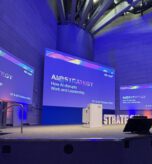
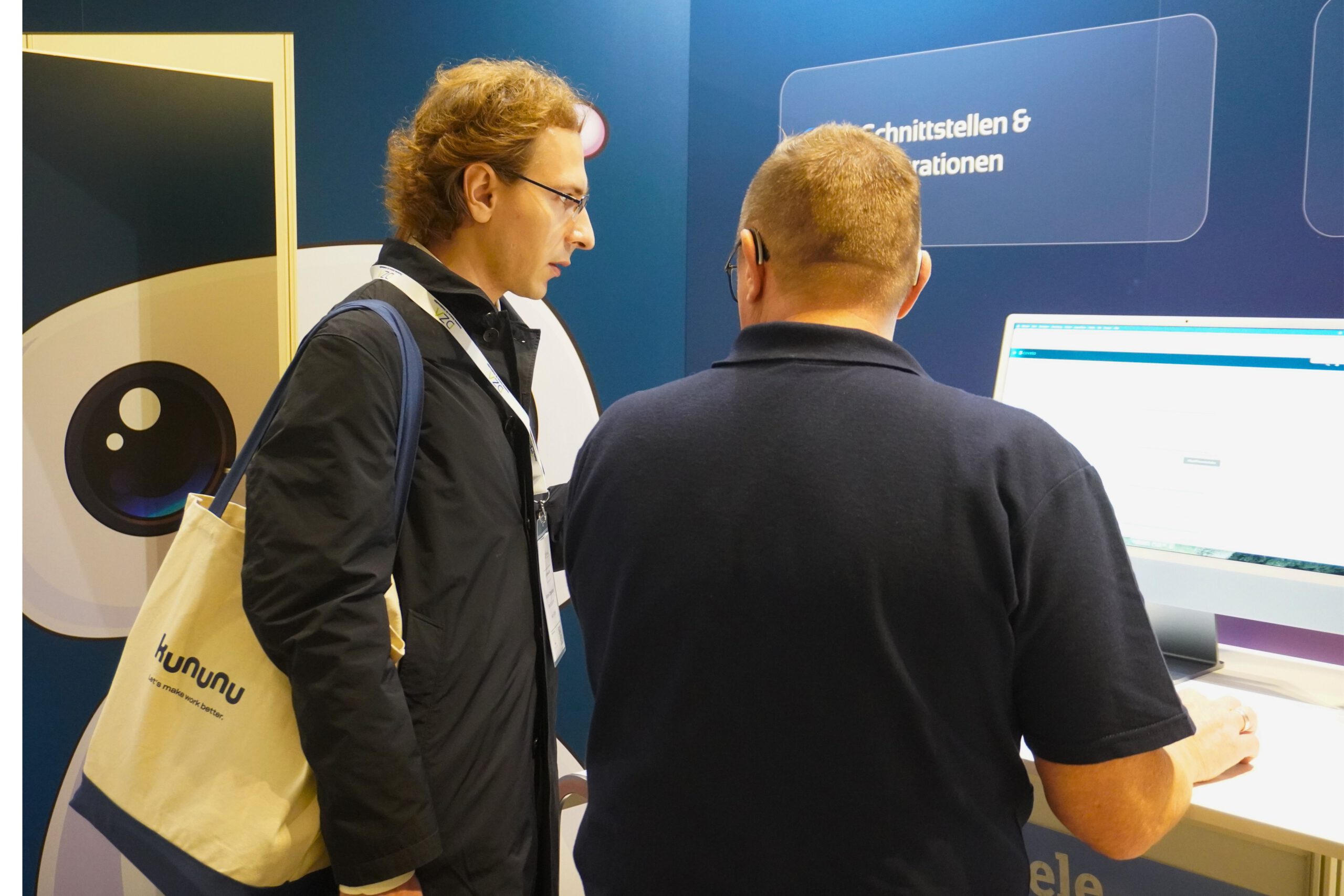
In October, I had the chance to make STAFFINGpro in Wiesbaden my office for the day. It was an opportunity to exchange ideas with fellow temp, perm and contracting providers and hear fresh perspectives on the future of our industry.
Two keynotes in particular stayed with me. Simone Straub and Ute Muster approached the market from different angles, but both raised important questions about where our industry is heading.
The picture is not a comfortable one. The market is shrinking, AI is taking over routine recruiting tasks, and clients are tired of being flooded with CVs. Yet what I heard in Wiesbaden was not a crisis narrative. As one of Straub's slides put it, you can read the decline as a crisis, “or as what it also is: a billion-euro market that is being redistributed.”
What does that redistribution mean for recruiters and for companies looking for the expertise their transformation projects depend on?
A market being redistributed
The numbers presented on stage were sobering. According to the German Federal Employment Agency, temporary staffing peaked at around 1.08 million workers in November 2017. By June 2025, the figure had fallen to 669,000: almost 40% fewer, and 8% down on the previous year alone.
Recruitment consulting is under pressure too. The BDU estimates the German market at €2.7 billion in 2025, around 10% below its 2022 peak after three consecutive years of decline. Executive search alone has lost 13.5%.
At the same time, there are signs of movement. A few days before the fair, I listened to an Folge des Podcasts episode of the podcast Liebe Zeitarbeit – HR trifft KI – Bereit für Zeitarbeit, in which host Daniel Müller spoke with Alexander R. Petsch, founder of the HRM Institute and host of STAFFINGpro. Petsch offered an interesting explanation for the recent slight upturn in temporary staffing. Many companies are unsure whether certain roles will still exist in their current form once AI and automation have reshaped their operations. Rather than committing to permanent hires, they are turning to flexible staffing arrangements while they assess what comes next.
We see the same in our conversations with clients. Uncertainty does not stop hiring; it changes how companies hire. Project-based expertise and time-and-material models allow businesses to move forward without committing to organisational structures that may look very different in two years. For companies, this shift makes the choice of recruitment partner more important than ever.
Generic roles are going to the machines
Simone Straub, who has coached more than 250 recruitment consultancies, did not soften her message:
“Generic positions will soon be filled by technology. You have to decide: low-budget tech or high-level consulting.”
Simone Straub, CEO, Der Personalberater Coach GmbH
Recruiting expert Bill Boorman raised a similar question in his closing keynote: If AI can automate sourcing, matching, outreach and follow-up, what exactly are staffing providers still being paid for?
Finding a profile has become easier than ever. Finding the right person has not. CVs may look convincing on paper but still miss what matters: the project context, team dynamics, company culture and, above all, personality.
For companies, more CVs do not necessarily mean better hiring decisions. A provider competing primarily on speed will increasingly face technology that can deliver the same service faster and cheaper. The real value lies in judgement: knowing which candidates are genuinely worth considering, and why.


The best mandates never become a job ad
Straub's keynote was titled “Enough with the CV race.” Her central argument was straightforward: once a position is advertised, recruitment agencies, candidate databases and AI tools are all competing for the same vacancy. Price and speed often become the deciding factors.
The real competitive advantage comes earlier.
Straub contrasted recruiters who spend their days scanning job boards and competing for the same assignments with those who secure off-market mandates. The latter are brought into discussions early, work more often on an exclusive basis and build relationships that extend beyond individual vacancies.
The starting point is a change of mindset: “From service provider to trusted advisor.”
A trusted advisor understands the market, recognises relevant developments early and has a strong professional network. Above all, they build the trust needed to be involved in clients' plans before a specific hiring requirement emerges.
For clients, the implication is clear: involve your recruitment partner while you are still defining the project, not after the vacancy has been published. That is when a good advisor can help identify the expertise you actually need, rather than simply execute a search.
Supplier or advisor?
Straub gave recruiters in the audience a simple test of their own mindset. Do they see their role primarily as filling vacancies? Do they only start prospecting when their pipeline runs dry? Do they consider themselves interchangeable with competitors?
Anyone answering yes, she argued, is still thinking like a supplier.
Turned around, the same test can help companies assess the value of their recruitment partners.
- Do they specialise? A partner who takes on almost any role in any industry rarely knows a market in depth. Specialisation helps them assess candidate quality, availability and market rates with greater confidence.
- When do they contact you? Only when they need new business? A good advisor also reaches out to share relevant market developments, rare profiles or signals that could influence your hiring plans.
- What do your conversations revolve around? If you only discuss open vacancies, the relationship remains transactional. Conversations about future projects, business priorities and team structures help anticipate needs before they become urgent.
- Do they challenge your brief? Ein Vermittler liefert Lebensläufe passend zur Stellenbeschreibung. Ein Berater hinterfragt Anforderungen, erkennt Lücken im Profil und hilft, die tatsächlichen Ziele einer Position zu definieren.
- Could you replace them with a database tomorrow? If the answer is yes, their value is largely transactional. What a database cannot replace is informed judgement, a trusted network and an understanding of personality and fit.
The more of these questions you can answer in your partner's favour, the more value they can bring when involved early.
Why knowing is not the same as doing
Moving from supplier to advisor sounds convincing on a slide. Making it happen in daily work is another matter.
This was the focus of Ute Muster's keynote. Muster, from Sales in Action, explored why good intentions in sales so rarely translate into lasting changes in behaviour.
She shared two small polls among staffing providers about the obstacles to proactive new-client acquisition. Although not representative studies, the results were revealing: respondents most frequently cited established habits and a lack of confidence in conversations, ahead of willpower or organisational structure. In other words, the very skills that an off-market approach depends on, initiating conversations early and conducting them confidently, are often the first to fall by the wayside.
Muster explained this through the implementation dip – a concept described by education researcher Michael Fullan. During a period of change, performance often declines before it improves. Teams learn new methods, struggle to apply them and initially feel less capable than before. Many abandon the effort at precisely this stage.
She also referred to Hermann Ebbinghaus's forgetting curve: without repetition, people can forget a substantial proportion of newly learned information within a single day. Training therefore needs reinforcement and practical application to produce lasting results.
Although Muster was speaking about sales teams, the same pattern applies to business transformation. Whether implementing a new ERP system, migrating to the cloud or rolling out AI, the launch is rarely the greatest challenge. The difficult phase comes when new processes are not yet running smoothly and familiar ways of working still feel safer.
Our CEO, Horst Niederberger, identified a similar gap following DIGITAL X. According to Bitkom, 70% of German companies now offer AI training, yet two-thirds still rate their employees’ AI skills as low. Training is taking place, but the capabilities are not yet firmly established, and courses alone are not enough to make change stick (read his article).
Projects rarely fail at the kick-off. The real challenge is sustaining change when new processes are not yet running smoothly.
That is where experienced experts make the difference: people who have navigated similar challenges before and know how to turn initial learning into lasting progress.
What we are taking back to Munich
For us at eAces, Wiesbaden reinforced an approach we have always believed in: “It's all about personality.”
We have never seen our role as simply delivering profiles. The right expert is not necessarily the one whose CV matches the most requirements, but someone who fits the project, the team and the organisation.
What the industry is now discussing on stage reflects how we have always aimed to work with our clients.
As companies prepare their 2027 projects and budgets, the question is not only which roles need filling, but which expertise will help them move forward. Some capabilities will need to be built internally; others can be brought in flexibly.
The best time to have that conversation is before the need becomes urgent.
If you are currently planning your next projects and considering what expertise they will require, let's talk before the job ad goes out.
Lassen Sie uns darüber sprechen, bevor aus Ihren Plänen eine Stellenausschreibung wird.
WE ARE eACES
It costs nothing to ask. Literally.
Let’s talk about the position you need to fill, the scope of the role, your upcoming consulting project, the business case and your goals. Together, we’ll clarify the requirements and character of the role and give you an honest assessment of your hiring options. With us, you’ll get a no just as quickly as a yes.